

Room 209, Building 1, No. 3 Shugang Avenue, Hongmei Town, Dongguan City, Guangdong Province.

Global Supplier of Material Physical Property Testing Instruments5000+ customer deliverables worldwide
National consultation hotline:139-2293-2385

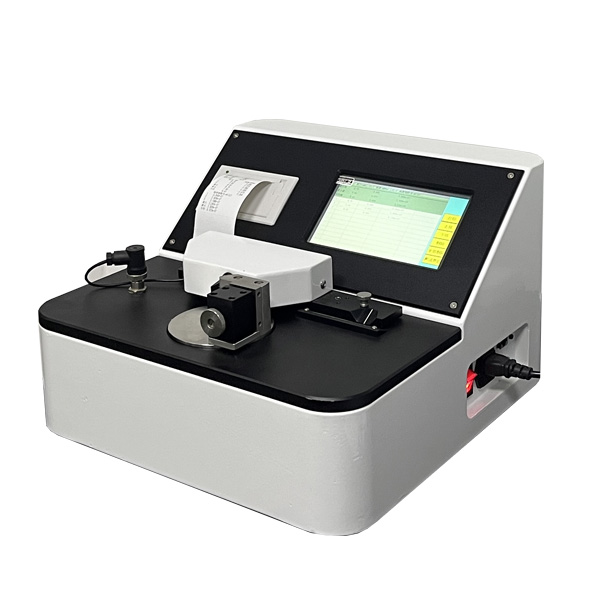
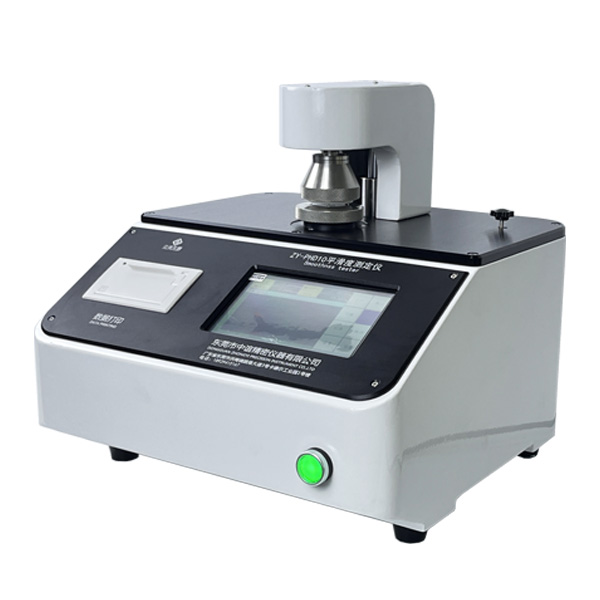
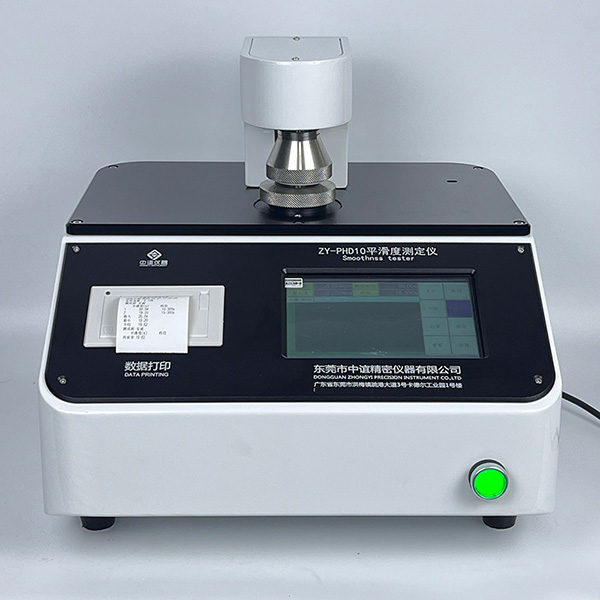
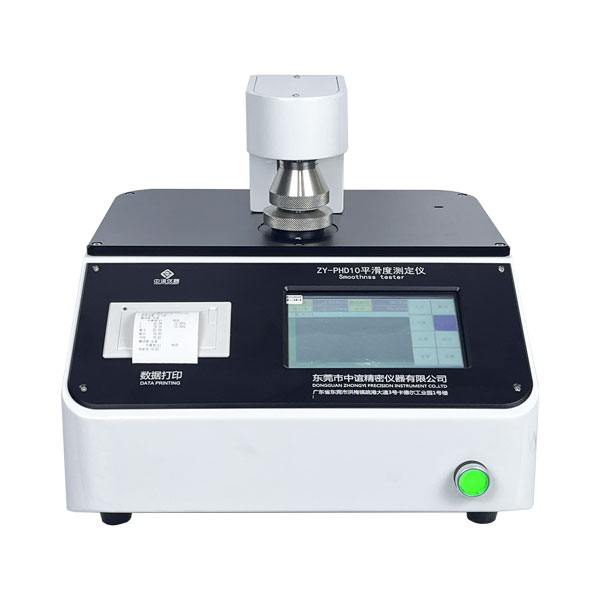
Beek Smoothness Meter ZY-PHD10

The ZY-PHD10 Smoothness Tester (the industry standard is the Buick method) is used to measure the microscopic smoothness of paper and cardboard surfaces, with results expressed in seconds (s). The higher the value, the smoother the surface. It is a core testing instrument in the paper, printing, and packaging industries.

Brand: Zhongyi Instruments

Model:ZY-PHD10

Order (MOQ): 1 unit

Place of Origin: Mainland China (Dongguan, Guangdong)

Payment Terms: TT or L/C

Delivery Time: 15–20 days

Safe and reliable
Well-crafted
Custom design
Quality Assurance
Free service hotline 139-2293-2385
  • Product Details
  • Technical Specifications
  • FAQ
  • Contact Us

Product Applications:

The ZY-PHD10 Paper Smoothness Tester is a specialized instrument designed to measure the surface smoothness of high-smoothness paper and cardboard. Based on the Bekk principle, the instrument quantifies smoothness by measuring the time it takes for air to pass through the gap between the test specimen and an annular plate under a specific pressure differential. The measurement range spans 0–9,999 seconds and supports three automatic settings.

standard:

GB/T 456、ISO 5627、TAPPI T479、JJG62、ISO 5627

Principle of Operation (Bekk Air Leakage Method):

The smoothness tester employs the Bekk air leakage method to evaluate paper smoothness by measuring the time required for a specific volume of air to pass through the interface between the paper and a glass plate under specific vacuum conditions.

The specific testing procedure is as follows:

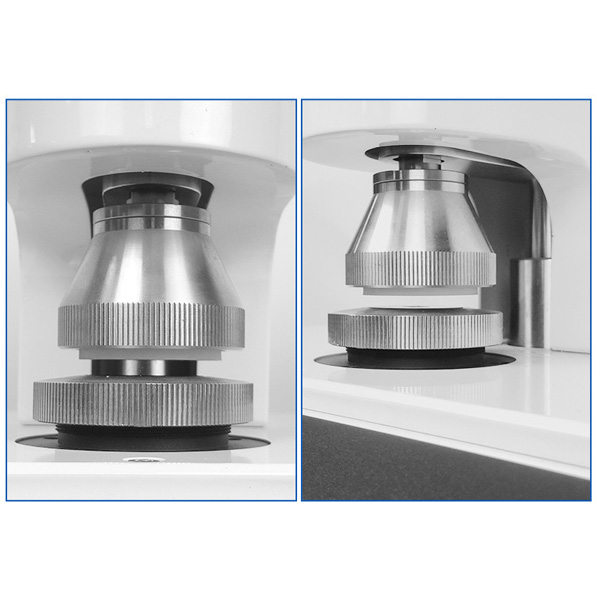
  1. Place the paper sample to be tested between a precision glass plate and a pressure-applying device. Apply a standard pressure (typically 1 kgf/cm²) to ensure the sample adheres tightly to the glass plate, forming a sealed space.
  2. Activate the vacuum system to reduce the air pressure within the sealed space, allowing air to slowly flow from the microscopic gaps between the paper surface and the glass into the vacuum chamber.
  3. The higher the smoothness, the flatter the paper surface, the greater the resistance to air flow, and the longer the required time (in seconds). Therefore, the duration of the test directly reflects the smoothness of the paper surface.

Intended Use: Specifically designed for testing high-smoothness paper and cardboard, such as printing paper, kraft paper, and cardstock, to provide a clear indication of the material’s printability.
Usage Restrictions: Not suitable for materials thicker than 0.5 mm or highly breathable materials (such as filter paper), as excessive air permeability may lead to inaccurate measurement results.
WhatsAppXFacebookCopy link
Parameter Specification
Measurement range 0–99,999 s
Test area 10 ± 0.05 cm²
Measurement pressure 100 ± 0.5 kPa
Accuracy/resolution 0.01 s
System Volume Large vacuum chamber volume (380 ± 1) ml, small vacuum chamber volume (38 ± 1) ml
Clamping and Pressurization Method Fully intelligent pneumatic pressurization, fully automatic clamping
Timing Error ≤1 s (for a 1000-second measurement)
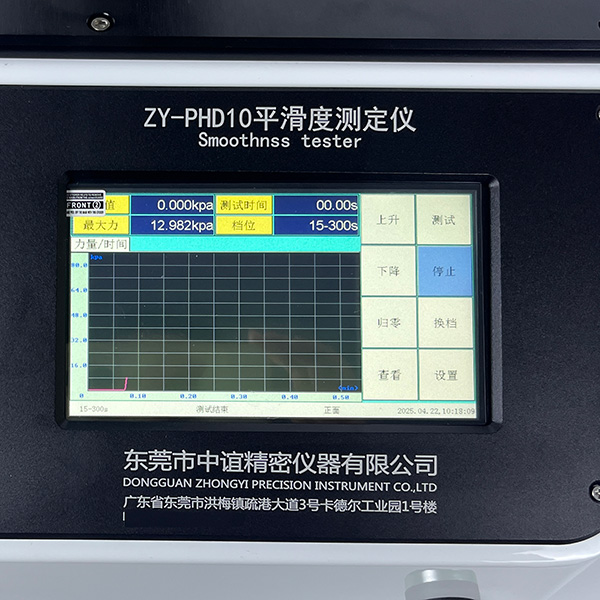
HMI 5.0-inch color touchscreen, real-time display of test data
Vacuum Setting Range Mode I 50.66–48.00 kPa, Mode II 50.66–48.00 kPa, Mode III 50.66–29.33 kPa
Measurement Function Fully automatic one-button test completion; automatic pressurization during testing; automatic reset upon test completion
Testing Method Front/back testing, measuring the difference between both sides
Print Output Built-in silent thermal printer or A4 printing via computer connection
Operating Environment Temperature (20±10°C), Humidity <85%
Dimensions (L×W×H, mm) 370×330×390
Weight Approx. 29 kg

Q1、What is a Bekk smoothness tester?

A:The ZY-PHD10 smoothness tester (the industry standard is the Bekk method) is used to measure the microscopic smoothness of paper and cardboard surfaces, with results expressed in seconds (s). The higher the value, the smoother the surface. It is a core testing instrument in the paper, printing, and packaging industries.

Q2: Why is smoothness testing crucial for printing quality?

Smoothness directly affects the printability of paper. High-smoothness paper ensures a more uniform transfer of ink during the printing process, resulting in clearer dots and more vibrant colors. If the smoothness is insufficient, prints are prone to defects like white spots, blurring, or uneven coloring. Therefore, it is a mandatory test index for high-end coated paper, newsprint, and office paper.

Q3: Which internationally recognized testing standards does this instrument comply with?

Zhongyiinstrument smoothness testers strictly comply with the following international and industry standards to ensure your laboratory data is recognized globally:

  • ISO 5627: Paper and board — Determination of smoothness (Bekk method).
  • TAPPI T479: Smoothness of paper (Bekk method).
  • GB/T 456: Paper and board — Determination of smoothness (Bekk method).

Please complete the information immediately to enjoy our exclusive services!

NumberNumber

Service Hotline:
139-2293-2385

WeChatWeChat
WeChat
WhatsAPPWhatsAPP
WhatsAPP